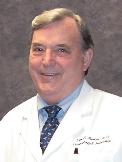
Dr. Dan Martin has retired from clinical practice and moved to Richmond, Virginia. He can be reached at:
- danmartinmd@gmail.com
- (901) 761-4787 (Google Voice Messages)
This site maintains information about endometriosis, infertility, as well as contact information for Dr. Martin's former patients.
Endometriosis • Infertility • Former Patients • About Dr. Martin
Endometriosis
Studying endometriosis is like nailing Jello to a tree.
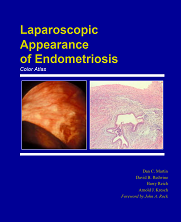
Laparoscopic Appearance of Endometriosis Color Atlas 1991 revised 2007 & 2017
The microscopic characteristics of endometriosis were described more than 150 years ago by Rokitansky in 1861.
Unrecognized microscopic ovarian endometriosis was recognized more than 100 years ago by Russell in 1899. He postulated the embryonic origin of endometriosis as Müllerian remnants.
Lockyer (1917) published the first classification of endometriosis.
Sampson published an extensive series of articles and first used the name endometriosis from 1921 to 1940. He described chocolate cysts, blebs, adenomyomatous infiltration in the rectovaginal septum, adherent surfaces, red raspberries, purple raspberries, blueberries, deep infiltration, inflammatory reactions, cancer arising in endometriotic implants and peritoneal pockets.
Sampson originally used earlier theories on embryonic origin, ovarian epithelial metaplasia, dissemination form ovarian endometriosis, lymphatic spread, and venous emboli, but subsequently postulated retrograde menstruation of tissue fragments as the origin of endometriosis. His retrograde theories are included in recent theories including retrograde stem cells and epigenetic changes.
Colorless, amenorrheic lesions were seen by Fallon in 1950.
Karnaky (1969) published an age dependent appearance of endometriosis starting with an initial water blister appearance.
Goldstein (1980) found endometriosis in 47% of adolescents with chronic pain using a close-up view. There were only petechial-like lesions and blebs in 20% of those.
Semm (1987) noted subtle clear lesions detected using meticulous search with magnification and discussed invisible lesions noted only after coagulation.
In memoriam: Ronald Elmer Batt, M.D., Ph.D. (history)
Friend, scholar, scientist, historian, and clinician
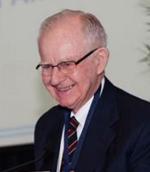
In Memoriam Ronald Elmer Batt 1935 – 2017
Dr Ronald Elmer Batt died 25 April 2017 aged 83 after a prolonged illness.
He is survived by his wife Kathleen, 12 children and step-children; 31 grandchildren and step-grandchildren; 6 step-great-grandchildren; and his sisters Norma Hinchy, Eileen Batt, and Phyllis Kavanaugh.
Ron was a friend to all, a scholar, a scientist, an historian, and a wonderful clinician. He will be missed by many including those who study or treat endometriosis and who continue to benefit from his contributions.
Endometriosis Foundation of America Award 2015
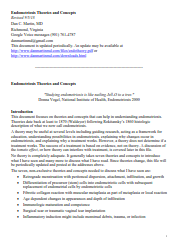
Endometriosis Theories and Concepts
There are many theories and concepts regarding endometriosis that can help in understanding endometriosis. An endometriosis theory may be useful at several levels including guiding research in treatment, acting as a framework for education, explaining why a treatment works, and studying endometriosis. However, a theory does not determine if a treatment works. Treatment should be based on evidence of its success. Discussions of how theory or the general limitations of knowledge can interfere with treatment are in the file.
Theories and concepts can be divided into the cell of origin and the pathophysiologic transition from an original endometrial cell to endometriosis
The Cell of Origin
Dissemination / Metastasis
- Retrograde Menstruation
- Hematogenous Dissemination
- Lymphatic Dissemination
- Traumatic / Surgical Dissemination
Müllerian Theories
- Müllerian Remnants (any congenital)
- Müllerianosis (organoid)
- Mülleriosis (non-organoid and transitional)
- Secondary Müllerian System
Metaplastic Theories
- Peritoneal / Mesenchymal Stem Cells
- Bone Marrow Stem Cells
- Endometrial Stem Cells
Transition from endometrium to endometriosis
Endometriosis Theories and Concepts
The transition involves the local environment, inflammation, epigenetic changes, genetic changes progenitor cell differentiation, biochemical changes immunologic changes, apoptosis, autophagy, reactive oxygen species, fibrosis, muscular metaplasia, macrophage migration inhibitor factor, clonality, microRNA, signaling, nerve activation, cancer-associated driver mutations, fibroblast to myofibroblast transdifferentiation, neurogenesis, angiogenesis, genetic dysregulation and more that are covered in the PDF.
No theory is completely adequate. Of the more than 80 theories and concepts covered in the PDF, it generally takes seven to discuss what I have seen and many more to introduce what I have read. Since theories change, the PDF “Endometriosis Theories and Concepts” will be periodically updated.
Endometriosis Fertility Index
David Adamson's 2010 Endometriosis Fertility Index (EFI) is a clinical tool used to predict pregnancy rates after endometriosis surgery. It is the only system that is predictive of fertility, but is not a staging system. The EFI has 6 levels and uses the 1985 American Fertility Society (rAFS) staging system’s total and endometriosis sub-total score separately. The EFI is based 50% on history, 30% on surgical findings at the completion of surgery, and 20% on the rAFS scores.
The 1984 rAFS staging system was renamed the revised American Society of Reproductive Medicine (rASRM) staging system in 1996 after that organization changed their name. The 1996 rASRM endometriosis staging system is the same as the 1984 rAFS endometriosis staging system with additional examples.
The rAFS is the staging system most commonly used at surgery but is not predictive of fertility. It can be used to describe the appearance at surgery and is somewhat predictive of surgical difficulty. The rAFS has 150 points. A score 40 or higher is rAFS stage 4. The rAFS separates stage 4 into scores for 4A (40 to 70 points) and 4B (71 to 150 points). Scores of 71 and higher are generally seen only with severe adhesions. Adhesions, a type of scar tissue, can block the pathway that the eggs use to get to the tube. Canis (1992) also uses the rAFS score of >70 to be stage 5 for endometriosis.
If your physician does not use the EFI, then you can use the following for an approximate score. Note that high scores are good.
(1) Calculate your historical factors score using the sum of the 3 historical factors.
Age
- Through age 35 years2 Points
- 36 to 39 years1 Point
- 40 years or older0 Points
Years of Infertility
- Infertility up to 3 years2 Points
- Infertility greater than 3 years0 Points
Prior Pregnancy
- Yes1 Point
- No0 Points
(2) Calculate your Surgical Factors score by comparing your understanding of your surgery to the following possibilities. If you have more than one answer, use both your highest and lowest estimates to see how those change the pregnancy rate projection on the Estimated Percent Pregnancy figure below.
- Mild endometriosis and healthy tubes with no adhesions5 Points
- Moderate endometriosis with healthy tubes and with all endometriosis and all adhesions removed4 Points
- Moderate endometriosis with mildly damaged tubes and all endometriosis and adhesions removed3 Points
- Severe endometriosis with healthy tubes, no large endometriomas, and all adhesions removed2 Points
- Severe endometriosis with large endometriomas, mildly damaged tubes and most adhesions removed1 Point
- Severe endometriosis, severe tubal damage and large endometriomas with many adhesions remaining0 Points
(3) Add the totals for your historical factors score and your surgical factors score for a total. Compare the total with the estimated percent pregnancy below.
| EFI Score | Pregnant at 1 Year | Pregnant at 3 Years |
|---|---|---|
| 9-10 | 67% | 75% |
| 7-8 | 39% | 66% |
| 6 | 30% | 54% |
| 5 | 27% | 42% |
| 4 | 15% | 28% |
| 0-3 | 10% | 10% |
Is there a stage 5 endometriosis?
Canis (1992) suggested using a revised American Fertility Society (rAFS, 1985) score of >70 as a new stage 5 for endometriosis.
This is also the 4B sub-score of the Endometriosis Fertility Index (EFI) (Adamson 2010). The EFI is a clinical tool used to predict pregnancy rates after endometriosis surgery. It is the only system that is predictive of fertility, but is not a staging system. The EFI has 6 levels and uses the 1985 rAFS staging system’s total and endometriosis sub-total score separately.
The rAFS (or rASRM) is the staging system most commonly used in surgical research. It is useful in comparing the gross appearance at the beginning of surgery and is somewhat predictive of surgical difficulty. But, it is not predictive of fertility, pain, the depth of infiltration, or the volume of infiltrating endometriosis.
The rAFS has 150 points. A score of 40 or higher is rASRM stage 4. The EFI separates stage 4 into scores for 4A (40 to 70 points) and 4B (71 to 150 points). Scores of 71 and higher are generally seen only with severe adhesions. Adhesions, a type of scar tissue, can block the pathway that the eggs use to get to the tube.
Adamson GD & Pasta DJ. Endometriosis fertility index: the new, validated endometriosis staging system Fertil Steril 2010;94(5):1609–15
American Fertility Society. Revised American Fertility Society classification of endometriosis 1985. Fertil Steril 43(3):351-352, 1985
American Society for Reproductive Medicine classification of endometriosis: 1996. Fertil Steril 67(5): 817-21, 1997
Canis M, Pouly JL, Wattiez A, et al. Incidence of bilateral adnexal disease in severe endometriosis (revised American Fertility Society [AFS], stage IV): should a stage V be included in the AFS classification? Fertil Steril 1992;57:691–692.
Infertility
Tubal Reversal
Dr. Martin's Worksheet can be used to predict success rates after tubal reversal. This was last updated in 2016.
TODO: Add thumbnail of TR pics
General Links
Journal of Gynecologic Surgery
Mary Ann Liebert, Inc, Publishers
World Congress of Endometriosis 2017
World Congress of Endometriosis 2020
Endometriosis Association 1980-2005 Anniversary
Endometriosis Foundation of America
Notes on Insurance Coverage
Insurance policies do not usually cover tubal surgery. They may cover some of the evaluation or testing before surgery without covering the surgery./p>
First check exclusions for:
- Infertility testing
- Infertility services and treatment
- Reversal of tubal ligation / tubal reanastomosis.
Then, if services are not excluded, ask if they cover
- Infertility testing ICD-10 code Z31.41
- Tubal infertility ICD-10 code Z97.1
- Past tubal ligation ICD-10 code Z98.51
- Tubal reversal CPT-4 code 58750
If you get an approval letter, read it carefully for exclusions./p>
Insurance company approval does not always mean the service is covered. The claim for an approved service can be denied if the service was excluded or otherwise not covered. Check for both exclusions and coverage./p>
Note - the old codes were:
- Infertility testing ICD-9 code V26.21
- Tubal infertility ICD-9 code 628.2
- Tubal reversal CPT-4 code 58750
Former Patients
Dr Ben Abdu and Dr Laura Detti are available to follow Dr. Martin's patients in Memphis.
Dr Ben Abdu is the Divisional Director of Minimally Invasive Surgery and has revised the tubal reversal program.
Dr. Laura Detti is Director of Reproductive Endocrinology and Infertility.
Medical Records
If you were seen by Dr. Dan (Daniel) C Martin in Memphis or Germantown, Tennessee and need to request your records, please call the numbers below.
Regional One Health
UT Regional One Physicians (UTROP)
877 Jefferson Avenue
Memphis, TN 38103
Phone: (901) 545-7581
This is for UTROP services at:
7945 Wolf River Boulevard
Suite 320
Germantown, TN 38138-1733
880 Madison Avenue
3rd Floor Ob Gyn
Memphis, TN 38103
University Clinical Health
Previously: UT Medical Group (UTMG)
Phone (901) 866-8400
This is for UTMG services at:
7945 Wolf River Boulevard
Suite 320
Germantown, TN 38138-1733
About Dr. Martin
Current Positions
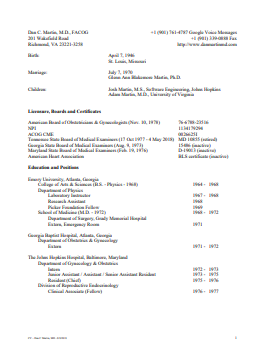
Dr. Martin’s curriculum vitae (CV)
- Virginia Commonwealth University, Institutional Review Board
- University of Tennessee Health Science Center, Professor Emeritus
- Baptist Memorial Hospital, Memphis, Emeritus physician,
- American College of Obstetricians and Gynecologists (FACOG), Life Fellow
- American Society of Reproductive Medicine, Technology Committee
Past Positions
-
University of Tennessee Health Science Center
- Professor, Obstetrics and Gynecology
- Interim Director, Gynecologic Services
- Divisional Director, Reproductive Endocrinology
- Divisional Director, Minimally Invasive Gynecologic Surgery
- Faculty Senate
- Institutional Review Board,
- Johns Hopkins Medical Institutes, Divisional Director in Medical Education,
- President of the American Association of Gynecologic Laparoscopists
- President of the Gynecologic Surgery Society
- Charter Member of the Society of Reproductive Surgeons
- Member American National Standard Institute Committee on Lasers
- Board of the International Society of Gynecological Endoscopy
- Chairman Maryland Junior Fellows American College of Obstetricians and Gynecologists
- Delegate to the Tennessee Medical Association
- Editor of the AAGL Manual of Endoscopy
- AAGL (formerly American Association of Gynecologic Laparoscopists), Chair, By-Laws Committee
- Fellowship in Minimally Invasive Gynecologic Surgery (SRS & AAGL), Chair, Ethics Committee
- World Congress of Endometriosis, Co-Chair, Pelvic Pain and Pain Mechanisms, 2017
Education
- Central Gwinnett High School, Lawrenceville, Georgia, 1960-1961
- Georgia Military Academy (Woodward Academy), College Park, Georgia, 1961-1964
-
Emory University, Atlanta, Georgia
- BS Physics, 1968
- MD, 1972
-
Johns Hopkins Medical Institutes, Baltimore, Maryland
- Internship in Gynecology and Obstetrics 1972-73
- Residency in Gynecology and Obstetrics 1973-76
- Fellowship in Reproductive Endocrinology 1976-77
- with Dr. Howard W Jones, Jr and Dr. Georgeanna Seegar Jones
- Microsurgery Techniques - Dr. Brian Cohen 1977 to 1979
- Microsurgery Techniques - Dr. Victor Gomel 1980
Microsurgery & Minimally Invasive Educator
- Tubal Ligation Reversals 1974 - 2016
- Operative Laparoscopy 1981 - 2016
- Department of Ob/Gyn, University of Tennessee Health Science Center 1977- 2016
- Microsurgery and Laser Labs, University of Tennessee Health Science Center 1981 - 1993
- Microsurgery Labs, University of California, Irving 1984 - 1989
- AAGL / Presbyterian Hospital / University of Texas Southwestern, Dallas 1984 -1989
Editorial Boards and Reviewer
- Journal of the American Association of Gynecologic Laparoscopists
- Journal of Gynecologic Surgery
- Fertility and Sterility
- American Journal of Obstetrics and Gynecology
- Endometriosis Zone
Honors
- Professor Emeritus, College of Medicine, University of Tennessee Health Science Center 2016
- Alpha Omega Alpha, Medical Honorary Society
- Emeritus Physician, Baptist Memorial Hospital, Memphis
- Association of Professors of Gynecology and Obstetrics (APGO), Excellence in Teaching Award 1010 & 2015
- One of the original eight reproductive surgeons in Woodward and White’s "The Best Doctors in America" 1992
- Doctor's Doctor, Memphis Commercial Appeal 1993-2016
- U.S. News & World Report, Castle Connolly’s Top Docs 2011-2016
- Certificate of Achievement, Consumers’ Checkbook 2009
- WREG Memphis - Top 1% of Physicians by Consumers’ Checkbook
- Picker Foundation Fellow, Radiation Physics
- Codman Surgical Awards for Medical Education
- Society of Reproductive Surgeons of the American Fertility Society
- American Fertility Society Video Awards
- American Association of Gynecologic Laparoscopists Video Awards
- Society of Laparoscopic Surgeons Best of Laparoscopy Update
- Endometriosis Association Physician Recognition Award
- Foreword to the Endometriosis Sourcebook
- Texas Association of Obstetricians and Gynecologists Honorary Member
- New York Festivals: Television and Non-Broadcast Awards
- Sigma Pi Sigma (Physics Honorary Society) Associate
- Who's Who in Medicine and Health Care
- Who's Who in America
International Recognition
- Axel Munthe Award Presenter
- Australian Gynaecological Endoscopy Society
- Japanese Endometriosis Society
- Argentina Endoscopy Society
- International Society of Gynecological Endoscopy
-
International Educator
- Argentina
- Australia
- Brazil
- Belgium
- Canada
- China
- Dominican Republic
- England
- Iceland
- Israel
- Italy
- Japan
- Mexico
- New Zealand
- Republic of South Africa
- Russia
- Singapore
- Switzerland
- West Germany
- Zimbabwe
Temporary Medical License to Perform Surgery in Educational Classes
- Australia
- Israel
- Italy
- Republic of South Africa
- Russia
- New Zealand